Knee discomfort is a common concern that affects mobility, independence, and daily function across many age groups. Vita Knee Relieve is discussed as an informational topic centred on joint care awareness rather than instant correction. This article explains how knee strain develops, which factors influence joint comfort, and which supportive practices may help maintain smoother movement over time. The focus remains educational, practical, and easy to follow.
Why Knee Discomfort Develops Over Time
The knee carries body weight during standing, walking, and lifting. Repeated pressure across this joint may gradually affect comfort. Natural aging often reduces cartilage cushioning, which can alter movement quality. Past injuries sometimes change joint mechanics. Limited muscle support may also contribute to uneven load distribution during motion.
Basic Structure of the Knee Joint
The knee joins the upper thigh and lower shin bones through cartilage layers, ligaments and tendons. It is designed to support legs in straightening and bending. Cartilage covering reduces friction while moving. And ligaments through strong bands ensure stability under stress. A controlled interaction between these components allows steady and comfortable movement.
Daily Activities That Increase Knee Stress
Routine actions place repeated force on knees without notice. Stair climbing applies additional load compared with flat walking. Extended sitting may lead to stiffness after standing. Sudden twisting motions challenge joint stability. Uneven surfaces sometimes increase strain during movement.
Early Signals That Should Not Be Ignored
Mild stiffness after rest often appears before persistent discomfort. Some individuals feel tightness while rising from chairs. Swelling after activity may indicate irritation. Clicking sounds can reflect reduced joint smoothness. Paying attention to these signs may support earlier care decisions.
How Muscle Support Influences Joint Comfort
Strong muscles near the knee help absorb impact during motion. Thigh muscles assist with bending and straightening control. Hip strength supports alignment during walking. Weak surrounding muscles allow excess pressure on joint surfaces. Balanced muscle conditioning often improves stability.
Weight Balance and Its Effect on Knees
Body weight directly affects knee loading during movement. Even small increases may amplify pressure with each step. Maintaining a balanced weight helps reduce repetitive strain. Gradual weight management supports joint comfort without sudden stress. Sustainable habits tend to produce steadier results.
Role of Circulation in Knee Ease
Healthy blood flow supports tissue nourishment near joints. Limited circulation may contribute to stiffness after inactivity. Gentle movement encourages fluid exchange within the knee. Warming muscles before activity prepares tissues for motion. Circulation support plays a quiet yet meaningful role in comfort.

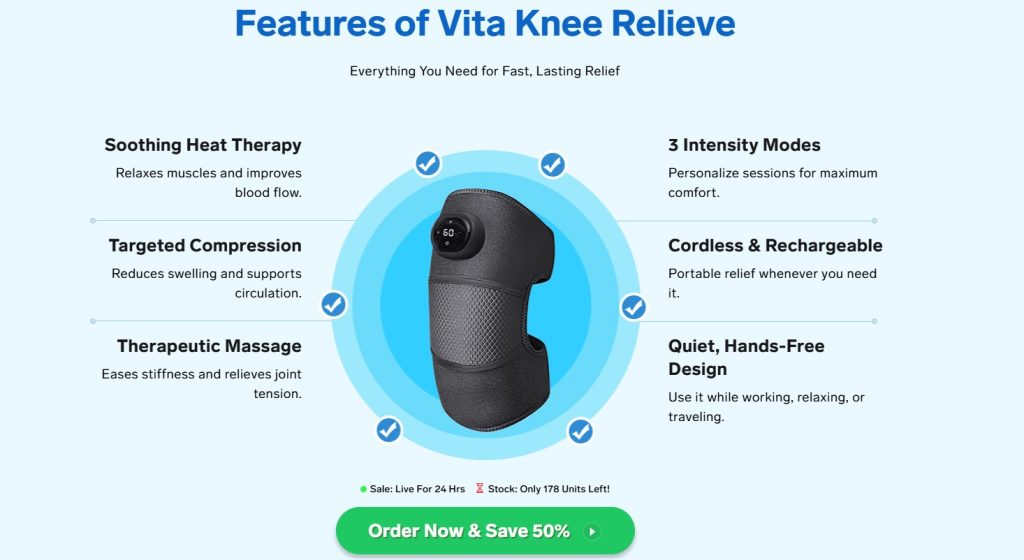
Supportive Focus Associated With Vita Knee Relieve
Vita Knee Relieve emphasizes awareness of joint care through consistent support habits. The concept centers on reducing strain while encouraging natural movement patterns. Attention is placed on gradual improvement rather than immediate change. This perspective highlights patience and routine as key elements of joint maintenance.
Importance of Stretching for Mobility
Stretching maintains elasticity within muscles and connective tissues. Brief, measured stretches before activity help joints prepare for movement. Post activity stretches reduce muscle stiffness. Balanced daily routines support front and back leg. Gentle movements bring consistency than forceful exertion.
Low-Impact Movement Options
Low-impact activities reduce joint stress while supporting mobility. Swimming allows full movement without weight pressure. Cycling promotes controlled leg motion. Walking on even ground supports circulation. These options often suit individuals seeking steady activity with reduced strain.
Rest Periods and Joint Recovery
Recovery time allows tissues to settle after use. Continuous strain without rest may worsen discomfort. Short breaks during repetitive tasks protect joint structures. Nighttime rest supports natural repair processes. Balanced activity combined with recovery encourages long-term ease.
Influence of Footwear on Knee Alignment
Your choice of footwear affects how body force travels through the leg muscles. Poor foot support may affect step alignment adversely. Cushioned shoes absorb shock impact. More stable options encourage controlled movement. Choice of proper footwear often lowers chances of unnecessary stress in the joints.
Nutrition Factors Related to Joint Health
Nutrition contributes to muscle strength and tissue maintenance. Protein supports surrounding muscle structure. Vitamins assist cartilage upkeep. Minerals play a role in bone support. Balanced meals encourage overall physical function that reflects in movement comfort.
Managing Knee Load During Work Hours
Work environments may involve prolonged sitting or standing. Adjusting chair height supports joint angles. Standing breaks prevent stiffness accumulation. Workspace setup influences posture throughout the day. Small adjustments often reduce repetitive strain.
Emotional Wellbeing and Physical Sensation
Emotional stress sometimes increases muscle tension. Tight muscles may affect joint comfort indirectly. Calm breathing supports relaxation during movement. A steady mindset encourages consistent care habits. Mental balance often complements physical wellbeing.
When Professional Assessment May Be Needed
Persistent discomfort may require expert evaluation. Professionals assess movement patterns and joint alignment. Guidance supports targeted care strategies. Early assessment may help limit progression. Expert input complements personal care routines.
Long-Term Practices for Knee Support
Sustained comfort depends on regular supportive habits. Gradual changes encourage adaptation without overload. Monitoring daily movement helps prevent repeated strain. Consistency builds dependable outcomes over time. Long-term focus supports ongoing mobility